THE INTERNATIONAL RELATIONS OF EUROPE
Thomas Christiansen, Flavia Lucenti
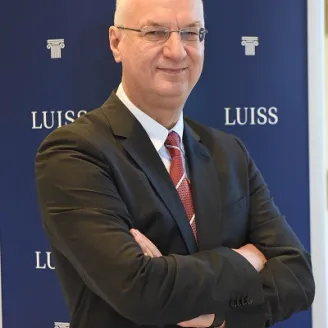
Thomas Christiansen
tchristiansen@luiss.it
Obiettivi formativi
The purpose of this course is to situate the European Union (EU) in the context of global politics, in order to understand both the role the EU plays across a range of thematic and geographical areas of international politics, and the impact that external developments have on Europe.
Prerequisiti
Proficiency in spoken and written English
Basic knowledge of the history, institutions and policies of the European Union
Risultati di apprendimento attesi
Upon completion of the course, students will have:
A thorough knowledge of the EU institutions and decision-making procedures in the area of foreign policy
An awareness of the opportunities and limitations for EU external action, in particular with regard to the inter-relationship between economic, security and normative considerations
A good knowledge of the variety of relations the EU maintains with the major powers and key regional organisations across the globe
An understanding of the main trends in global politics and the impact that these have on the EU
A capacity to identify the main driving forces in EU external relations and to critically examine the challenges and opportunities confronting the EU in an emerging multipolar world
Contenuti Del Corso
The course introduces students to the history and institutions of EU foreign policy making, and then examines in more detail Europe’s role in key area of global governance (security, trade, technology) as well as its relations with major powers and key regions around the world.
Testi Di Riferimento
S. Keukeleire and T.Delreux, The Foreign Policy of the European Union (Palgrave, 2014)
C. Hill, M. Smith, and S. Vanhoonacker (eds), International Relations and the European Union (OUP, 2017)
Metodologie Didattiche
The course combines a number of educational formats, specifically lectures, student debates and classroom discussion. The emphasis is on interactive and problem-based learning. Sessions will feature lectures by the instructor (ca.45mins) which will present key developments in the field and in the literature, and raise questions and problems for subsequent discussion. The remainder of the session will then be devoted to classroom discussion addressing these questions, and any other points that students may want to raise. There will also be sessions during which groups of students – having worked together to research the particular issue – will debate key questions and raise points for subsequent classroom discussion.
Modalità di verifica dell'apprendimento
The course will be assessed through a combination of continuous assessment of student participation and a final exam.
Criteri per l’assegnazione dell’elaborato finale
Min 29/30
Settimana 1
Hodson, D., & Peterson, J. (2017) Institutions of the European Union. Oxford: Oxford University Press, Ch.13.
Keukeleire, S. and Delreux, T., The Foreign Policy of the European Union (London: Palgrave, 2014), Chs. 1 and 2.
Settimana 2
Edwards, G. (2017) ‘Chapter 3: Engaging the World’ In International Relations and the European Union, in International Relations and the European Union, edited by and Vanhoonacker S., Hill C., Smith M. Oxford University Press.
Keukeleire, S., De Bruyn, T . (2017) ‘Chapter 18: The European Union, the BRICS, and Other Emerging Powers, in International Relations and the European Union, edited by and Vanhoonacker S., Hill C., Smith M. Oxford University Press.
Barbé, E., & Morillas, P. (2019). The EU global strategy: the dynamics of a more politicized and politically integrated foreign policy. Cambridge review of international affairs, 32(6), 753-770.
Lehne, S. (2022) ‘Making EU Foreign Policy Fir for Geopolitical World’, Carnegie Europe, https://carnegieeurope.eu/2022/04/14/making-eu-foreign-policy-fit-for-geopolitical-world-pub-86886
Niklas H. (2022), 'The Ambiguity of the EU’s Global Role: A Social Explanation of the Term ‘Strategic Autonomy’', (2022), 27, European Foreign Affairs Review, Issue SI, pp. 21-38, https://kluwerlawonline.com/journalarticle/European+Foreign+Affairs+Review/27.2/EERR2022010
Settimana 3
Damro, C. (2012) ‘Market power Europe’, Journal of European Public Policy 19(5): 682–699.
Dimier, V. (2006). 'Constructing Conditionality: The Bureaucratization of EC Development Aid'. European Foreign Affairs Review, 11: 263–280.
Meunier, S. (2007) ‘Managing Globalization? The EU in International Trade Negotiations’, JCMS: Journal of Common Market Studies 45(4): 905–926.
Meunier, S. and Nicolaïdis, K. (2006) ‘The European Union as a conflicted trade power’, Journal of European Public Policy 13(6): 37–41.
Meunier, S. (2014) ‘Divide and conquer? China and the cacophony of foreign investment rules in the EU’, Journal of European Public Policy 21(7): 996–1016.
Roederer-Rynning, C. and Kallestrup, M. (2017) ‘National parliaments and the new contentiousness of trade’, Journal of European Integration 39(7): 811–825.
Settimana 4
Dumoulin, Marie (2023) “One step beyond: Why the EU needs a Russia strategy”, European Council on Foreign Relations, https://ecfr-eu.cdn.ampproject.org/c/s/ecfr.eu/article/one-step-beyond-why-the-eu-needs-a-russia-strategy/?amp
Khudoley K. and Raś M (2021), The history of Russia-European Union relations, Chapter 1, in Tatiana Romanova, Maxine David, The Routledge Handbook of EU-Russia Relations: Structures, Actors, Issues. Milton: Taylor and Francis
Lonardo L. Russia's (2022) War Against Ukraine and the Foreign Policy Reaction of the EU: Context, Diplomacy, and Law. Cham: Springer International Publishing AG; 2023.
Siddi, M. (2022). The partnership that failed: EU-Russia relations and the war in Ukraine in Journal of European Integration, 44(6), 893-898, https://www.tandfonline.com/doi/abs/10.1080/07036337.2022.2109651
Timothy Garton Ash G.T, Krastev I, Leonard M. (2023). United West, divided from the rest: Global public opinion one year into Russia’s war on Ukraine in European Council of Foreign Relations, https://ecfr.eu/publication/united-west-divided-from-the-rest-global-public-opinion-one-year-into russias-war-on-ukraine/
Settimana 5
Wong, R., & Hill, C. (2011). National and European Foreign Policies: Towards Europeanization (London: Routledge), ch.1. (Text available online at Google Books)
Portela, C., & Raube, K. (2012). 'The EU polity and foreign policy coherence'. Journal of Contemporary European Research, 8(1): 3–20. (Text available online at https://jcer.net/index.php/jcer/article/view/340/316)
Wagnsson, C. (2010). 'Divided power Europe: normative divergences among the EU ‘big three’'. Journal of European Public Policy, 17(8): 1089–1105.
Ladrech, Robert (2010) Europeanization and National Politics (Houndmills: Palgrave Macmillan), ch.9
Settimana 6
Hill, C. (1993) ‘The Capability–Expectations Gap, or Conceptualizing Europe’s International Role’. Journal of Common Market Studies, Vol. 31, No. 3, pp. 305–28
Dijkstra, H. and Sophie V. (2017), ‘The Common Foreign and Security Policy’, Oxford Research Encyclopedia of Politics. (online publication)
Keukeleire, S. and Lecocq S. (2018), ‘Operationalizing the Decentring Agenda: Analysing European foreign policy in a non-European and post-western world’, Cooperation and Conflict, 43(2), pp. 277–295.
Manners, I. (2002) ‘Normative Power Europe: A Contradiction in Terms?’, JCMS: Journal of Common Market Studies 40(2): 235–258.
Orbie, J. (2006) ‘Civilian Power Europe: Review of the Original and Current Debates’, Cooperation and Conflict 41(1): 123–128.
Bickerton, C. J. (2011) ‘Towards a Social Theory of EU Foreign and Security Policy’, JCMS: Journal of Common Market Studies 49(1): 171–190.
Smith, M. (2004) ‘Toward a theory of EU foreign policy-making: multi-level governance, domestic politics, and national adaptation to Europe’s common foreign and security policy’, Journal of European Public Policy 11(4): 740–758.
Settimana 7
Speech by President von der Leyen on EU-China relations to the Mercator Institute for China Studies and the European Policy Centre (2023), European Commission, https://ec.europa.eu/commission/presscorner/detail/da/speech_23_2063
Ghiretti, F. (2021). Technological Competition: Can the EU Compete with China?. Istituto Affari Internazionali (IAI).
Vohra A. (2023) ‘Europe Is Stuck in a Toxic China Relationship’, Foreign Policy, June 22nd, 2023, https://foreignpolicy.com/2023/06/22/europe-is-stuck-in-a-toxic-china-relationship/
Xing L. (2022) China-EU Relations at a Crossroad: “Systemic Rivalry” or “Strategic Partnership”? Chapter 1, in Xing L. China-EU relations in a new era of global transformation. London: Routledge.
Gledić J. (2022) The role of culture in order-building Lessons from China’s engagement on the borders of the EU in Xing L. China-EU relations in a new era of global transformation. London: Routledge.
Gao, X. (2022). An attractive alternative? China’s approach to cyber governance and its implications for the Western model. The International Spectator, 57(3), 15-30.
Settimana 8
Suzuki, H. (2017) ‘The new politics of trade: EU-Japan’, Journal of European Integration 39(7): 875–889.
Casarini, N. (2020). ‘Rising to the Challenge: Europe’s Security Policy in East Asia amid US-China Rivalry’, The International Spectator, Vol. 55, No. 1, pp 78–92.
Reiterer, M. (2016) ‘Regional Security Architecture in the Asia-Pacific: What Role for the European Union?’ The ASAN Forum, Special Forum: Urgent Call for a Common Agenda between Europe and Asia, June 30, 2016. http://www.theasanforum.org/regional-security-architecture-in-the-asia-pacific-what-role-for-the-eu/
Reiterer, M. (2021a) ‘The 10th Anniversary of the EU-Korea Strategic Partnership’, Journal of Union Studies 57. https://brussels-school.be/sites/default/files/SpecialContribution-MichaelReiterer%28EU%EC%97%B0%EA%B5%AC%2057%ED%98%B8%29.pdf
Reiterer, M. (2021b) ‘EU security interests in the Korean Peninsula’, The Defence Horizon Journal. https://www.thedefencehorizon.org/post/eu-security-interests-in-the-korean-peninsula
Settimana 9
Bersick, S., Christou, G., & Yi, S. (2016). Cybersecurity and EU–China Relations. In E. Kirchner, T. Christiansen, & H. Dorussen (Eds.), Security Relations between China and the European Union: From Convergence to Cooperation? (pp. 167-186). Cambridge: Cambridge University Press. doi:10.1017/CBO9781316563243.010
Chernenko E. (2021). Cyber security in EU-Russia relations, Chapter 16, in Tatiana Romanova, Maxine David,
The Routledge Handbook of EU-Russia Relations: Structures, Actors, Issues. Milton: Taylor and Francis
Huw R., Cowls J., Hine E., Morley J., Wang V., Taddeo M., and Floridi L. (2023). “Governing Artificial Intelligence in China and the European Union: Comparing Aims and Promoting Ethical Outcomes.” The Information Society 39 (2): 79–97. https://doi.org/10.1080/01972243.2022.2124565.
Chan K., (2023), Europe’s Sweeping New Rules for Big Tech Are About to Kick In. Here’s What to Know, Time, https://time.com/6307075/europe-big-tech-regulations/
Schmidt E. (2023), Why Technology Will Define the Future of Geopolitics, Foreign Affairs, March/April
2023, https://www.foreignaffairs.com/united-states/eric-schmidt-innovation-power-technology-geopolitics
Settimana 10
Browning, Christopher S., and Pertti Joenniemi. "Geostrategies of the European neighbourhood policy." European journal of international relations 14.3 (2008): 519-551.
Barbé, Esther, and Elisabeth Johansson-Nogués. "The EU as a modest'force for good': the European Neighbourhood Policy." International affairs (2008): 81-96.
Smith, Karen E. "The outsiders: the European neighbourhood policy." International affairs 81.4 (2005): 757-773.
Dodini, Michaela, and Marco Fantini. "The EU neighbourhood policy: Implications for economic growth and stability." JCMS: Journal of Common Market Studies 44.3 (2006): 507-532.
Gstöhl, Sieglinde. "Theoretical approaches to the European neighbourhood policy." Theorizing the European neighbourhood policy (2017): 3-21.
Tom Casier (2011) To Adopt or Not to Adopt: Explaining Selective Rule Transfer under the European Neighbourhood Policy, Journal of European Integration, 33:1, 37-53
Lavenex, Sandra. "A governance perspective on the European neighbourhood policy: integration beyond conditionality?." Journal of European Public Policy 15.6 (2008): 938-955.
Lavenex, S. (2004) ‘EU external governance in “wider Europe”’, Journal of European Public Policy 11(4): 680–700.
Epstein, Rachel A., and Ulrich Sedelmeier. "Beyond conditionality: international institutions in postcommunist Europe after enlargement." Journal of European public policy15.6 (2008): 795-805.
Cianciara, A. K., & Szymański, A. (2020). 'Differentiated integration: towards a new model of European Union–Turkey relations?'. Turkish Studies, 21(2): 254–273.
Settimana 11
Simón L., Desmaele L. and Becker J. (2021) ‘Europe as a Secondary Theater? Competition with China and the Future of America’s European Strategy.’ Strategic Studies Quarterly 15 (1): 90-115.
Jones E. (2021) ‘Reinterpreting the transatlantic relationship.’ In The Making of European Security Policy, edited by Roberta N. Haar, Thomas Christiansen, Sabina Lange, and Sophie Vanhoonacker.
Biscop S. (2023) ‘European defence: No Zeitenwende yet’. Defence and Peace Economics, 1–5. https://doi.org/10.1080/10242694.2023.2201739
Duke SW (2019) ‘The Competing Logics of EU Security and Defence.’ Survival 61 (2): 139-140.
Settimana 12
Tocci, N. (2016) ‘The making of the EU Global Strategy’, Contemporary Security Policy 37(3): 461–472.
Biscop, S. (2020). 'No peace from corona: defining EU strategy for the 2020s'. Journal of European Integration, 42(8): 1009–1023.
Christiansen, T. (2020) ‘The EU’s New Normal: European Integration in an Era of Populism and Geoeconomics’, Journal of Common Market Studies 58: S1, 13-27.
Tocci, N. (2019), ‘The Demise of the International Liberal Order and the Future of the European Project’, IAI Commentaries, No. 18/63 (Rome: IAI). Text available online at: https://www.iai.it/sites/default/files/iaicom1863.pdf