CLIMATE - NEUTRAL & SMART CITIES
Fernando Christian Iaione, Luna Kappler
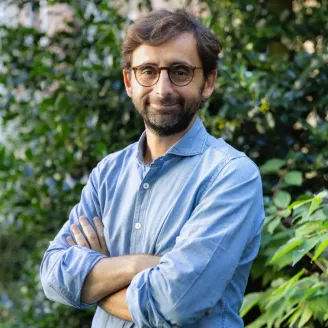
Fernando Christian Iaione
ciaione@luiss.it
Obiettivi formativi
The course is aimed at investigating aspects related to the emerging field of "Self-Sustainable Smart Cities". The course will offer students the chance to learn through an enquiry-based, R&I and integrated perspective that combines technical and natural sciences, urban and territorial planning, policy design, and innovation. Students will learn to co-design intelligent, sustainable, and inclusive urban solutions by leveraging both emerging technologies (digital twins, AI, urban sensors, data commons, etc.) infrastructures and nature-based approaches (urban forestry, NBS, green-blue infrastructures). Special attention will be given to integrated territorial strategies and climate planning tools.
Prerequisiti
No prerequisites
Risultati di apprendimento attesi
The aim of this course is to equip students with foundational and applied knowledge in the scientific, technological, ecological, and planning domains relevant to climate-neutral and smart cities. It prepares students to act as consultants, policymakers, or project managers in sustainable urban transformation processes.
The course offers both theoretical frameworks and practical tools to understand and critically assess contemporary urban challenges, such as digitalisation, climate change, overpopulation, and resource scarcity. Students will explore how these challenges reshape urban infrastructures, services, housing, mobility, and ecosystems, and how cities respond through technological and nature-based innovations.
Specific topics include data-driven development, urban tech (e.g., AI, IoT, digital twins), urban forestation and agriculture, ecological regeneration of brownfields, and inclusive planning strategies. The course fosters a cross-disciplinary understanding of how cities design, finance, and govern transitions towards climate neutrality.
Through lab sessions, students will apply what they have learned by:
examining real-world case studies of climate-neutral and smart city projects using scientific and territorial analysis;
investigating how urban governance systems enable, limit, or shape innovation and participation;
drafting a City Contract or an urban investment plan integrating planning, technology, and ecological solutions.
Making judgements:
We expect students to be able to critically analyse policies, technologies and planning projects related to climate-neutral cities. They are expected to demonstrate awareness of sustainability goals and innovation trajectories, assess trade-offs (e.g. social vs. ecological priorities), and propose context-sensitive strategies that integrate science, planning, and community involvement.
Applying knowledge and understanding:
The students will be able to understand the connections between global issues and local (city level) solutions and the interconnections between cities and their regional and national systems. Furthermore they will be invited to apply the results of their study by writing short reaction papers, as well as a writing collaborative project in the form of urban projects grants proposals or urban policies facing the above mentioned challenges.
Communications Skills:
This course will give the students the possibility to acquire and understand major terms and concepts in order to communicate with both technical and non-technical audiences their ideas, proposals, analysis and critical reasoning in the field of climate science, urban planning, emerging tech, and nature-based innovation in cities in the most effective and appropriate way. It will be also a way to test or develop their public speaking and writing capabilities.
Contenuti Del Corso
The course will first introduce students to the concept of self-sustainable smart cities from a technological, digital, climate neutrality and justice perspective (social; tech; climate justice). Emphasis is placed on new ways of designing, governing, and investing in cities that rely on science, data, technology, and ecosystems. Students will explore real-world strategies being adopted in Europe and beyond, through co-design and project-based learning. During the course, the student will work in groups to produce as an output the draft of an or R&I project such as an Horizon Europe Project Proposal or City Contract.
Testi Di Riferimento
The course does not foresee one handbook or book. Every week and for every topic addressed, the course instructors will assign readings to the class. The readings will be posted on the myluiss.
Examples of potential readings are:
E. Glaeser, The Triumph of the City, 2011
L. Albrechts, P. Healey & Klaus R. Kunzmann, Strategic Spatial Planning and Regional Governance in Europe, 2003
S.R. Foster, C. Iaione, Co-Cities, 2022
B. Katz, J. Wagner, The Rise of Innovation Districts, 2014
Sean Fox, Tom Goodfellow, Cities and Development, 2016
European Commission, Nature-Based Solutions for Climate Mitigation and Adaptation, 2021
T. Beatley, Handbook of Biophilic City Planning & Design, 2017
R. Roggema, Smart and Sustainable Cities and Buildings, 2020
S. Sassen, Global Cities, 1991
Metodologie Didattiche
The course will include research-based seminars/lectures on key topics in smart cities, plus lab sessions for group work.
Modalità di verifica dell'apprendimento
Evaluation method:
(I) Continuous assessment of: a) Individual short reaction paper(s);
b) Individual Contribution to Group work for an Horizon Europe Project Proposal / City Contract; c) Other co-creation / in-class activities - 30%
(II) Final exam in the form of a final discussion on: a) individual short reaction paper(s) presented during the semester;
b) individual contribution to the group work for the Horizon Europe Project Proposal / City Contract; c) other co-creation / in-class activities developed during the semester - 70%
This course does not foresee mid-term exam.
Students that do not attend the course (i.e. Erasmus students or explicitly authorized students under Luiss regulations) will be evaluated through an oral exam on mandatory papers.
Criteri per l’assegnazione dell’elaborato finale
Interest in the subject
Settimana 1
Introducing Climate-Neutral and Smart Cities: From Vision to System Design
Introducing climate-neutral and smart cities as a an interdisciplinary concept, merging urban planning, engineering, climate science, and digital innovation. Cities will be explored both as complex territorial systems of flows—energy, water, mobility, waste—and as decision-making environments influenced by governance, regulation, and socio-ecological dynamics.
The different definitions and contexts of climate neutrality and smart cities are then elaborated upon while addressing the multi-dimensional features of smart cities in different urban contexts.
This week will provide an overview of different urban visions behind the concept of smart cities, including tech-based cities, eco-cities, sharing, biophilic, and experimental cities. Cities worldwide are experimenting with policies that are inspired by alternative imaginaries of prosperity like sharing, commoning, degrowing. Lectures will also highlight the trade-offs and contradictions in contemporary approaches—between technological efficiency and ecological regeneration, between growth and degrowth, and between control and failure. Case studies will illustrate how cities are integrating science-based targets and systems thinking into planning.
The first week will also be devoted to the explanation of the working method of the course. The week will also explain the outputs that students will present as an individual and group project work. The week will include examples and a practical demonstration of the empirical exercise that the students will carry out.
Horizon Europe Project Proposal / City Contract Lab #0
Prototyping
The lab will be dedicated to introducing group work.
Students will work in teams to co-develop a City Contract, integrating planning, technology, and nature-based strategies. The structure, phases, and timeline for this project will be shared, along with templates and examples. The template and timeline of the exercises will be uploaded in the myluiss.
Settimana 2
Urban Regions and Territorial Planning for Climate Neutrality
This lecture focuses on the scale of urban regions as critical infrastructures for achieving climate neutrality. While cities are often treated as bounded administrative units, most climate-related challenges—mobility, energy, waste, water, land degradation—require systemic responses at the metropolitan and territorial scale. These responses are inherently spatial and strategic, requiring coordination across jurisdictions and sectors.
Students will be introduced to the methodology of strategic spatial planning, widely used by planners to address complex, long-term urban transitions. Key elements of the approach—vision-building, multi-actor alignment, scenario development, spatial coordination—will be explored in relation to climate goals. Particular attention will be paid to how this planning logic informs the structure and process of the City Contract.
The session will cover regional planning tools such as Spatial Development Frameworks, Metropolitan Mobility Plans, and Regional Climate Action Plans, with examples of how they are used to align land use, infrastructure investments, and nature-based systems across multiple municipalities.
The role of spatial data infrastructures and geospatial analysis will be emphasized as essential for linking climate science with planning decisions—enabling coordinated interventions such as decarbonized transport networks, shared green corridors, and cross-boundary energy communities.
Case studies from multi-city regions will illustrate how regional governance can activate integrated infrastructure strategies and adaptive land-use systems. Students will explore real-world challenges in fostering cooperation between diverse local authorities and the potential of shared digital platforms to support resource optimization, resilience, and territorial cohesion.
Possible discussion points include:
advantages and limitations of a regional approach to climate action
governance barriers and enablers for inter-city collaboration
success factors in cross-boundary infrastructure and green planning
the role of smart technologies in enabling regional data-sharing and impact monitoring
Settimana 3
Urban Climate Mitigation & Adaptation
This session focuses on climate mitigation and adaptation strategies in urban contexts. Students will explore tools and approaches to reduce emissions while increasing resilience to climate risks such as heatwaves, flooding, and resource stress.
The session includes a practical lab introducing the City Contract, where students begin applying analytical frameworks to real-world cases.
Settimana 4
Emerging Tech (AI, Quantum, Blockchain, IoT) and IoH in the City
This lecture explores the role of Emerging Technologies vis a vis the Internet of Humans (IoH) in shaping smart cities. Teachers and key practitioners will analyze how emerging tech like sensor networks, connected devices, and human-centered data systems enable real-time urban management, improve services, and support sustainability goals.
Horizon Europe Project Proposal / City Contract Lab #1
Prototyping
The lab will be dedicated to advancing with group work.
Settimana 5
Nature-Based Solutions and Innovation Systems – Multi-Scale Strategies for Climate-neutral & Smart Cities
This lecture explores Nature-Based Solutions (NBS) as essential multi-functional infrastructures that operate across spatial scales—from single plots to territorial systems. Far from being purely ecological gestures, NBS are deployed as integrated planning and design strategies in climate-neutral and smart cities, addressing risks such as heat, flooding, biodiversity loss, and food insecurity.
Students will examine how NBS manifest across multiple scales:
•regional scale: landscape-scale ecological networks, wetland buffers, and integrated watershed planning;
•city scale: blue-green corridors, riverfront restoration, and peri-urban rewilding projects coordinated by municipal authorities;
•neighbourhood scale: community gardens, micro-forests, bioswales, and ecological schoolyards that serve as social-ecological nodes;
•building scale: green roofs, green walls, and rainwater harvesting systems installed on individual homes or offices, reducing building emissions and mitigating urban heat.
Importantly, the session emphasizes that NBS do not rely solely on government action. Private actors—such as farmers adopting regenerative practices, businesses restoring riparian zones near production sites, or cooperatives launching agroecological parks—can directly contribute to regional and urban resilience through decentralized, place-based innovation.
The lecture also references the definition promoted by the European Union for the Conservation of Nature (EUCN): NBS are sustainable actions that protect, manage or restore ecosystems in a way that generates benefits for both human well-being and biodiversity. These actions can range from public policy to small-scale entrepreneurial initiatives.
Technical tools introduced will include nature-based performance indicators, NBS impact dashboards, GIS-based habitat connectivity modelling, and ecosystem services valuation techniques. Students will explore how to integrate NBS design and monitoring directly into the City Contract, ensuring that regenerative infrastructure is measurable, inclusive, and embedded in planning and investment frameworks.
Settimana 6
Urban & Regional Data Science
This module examines the technical nature and operational role of urban and regional data within the transition toward climate-neutral and smart territories. It focuses on data structures, acquisition methods, and processing pipelines, with particular attention to geospatial data, Earth observation sources, and real-time sensing systems that underpin contemporary spatial analysis.
Students will engage with multi-scale datasets—from satellite imagery to in-situ urban sensors—exploring how they are integrated, modeled, and visualized through GIS environments and advanced analytical platforms. Emphasis is placed on data interoperability, spatial resolution, and temporal dynamics, as well as on the use of tools such as digital twins, geospatial dashboards, and AI-driven models to support high-resolution mapping, monitoring, and scenario-building. The module frames data as a core technical substrate for understanding and simulating urban and regional systems, enabling more precise, adaptive, and performance-oriented planning practices.
Settimana 7
Integrated Urban Resource Systems – A Nexus Approach to Climate-Neutral Cities
This session introduces the nexus approach as a strategic method for planning climate-neutral and smart cities through the integrated management of interdependent resource systems—energy, water, waste, and food. Starting from the territorial and regional scale, students will explore how large-scale infrastructures (e.g., watersheds, agroecological zones, energy corridors) influence and structure resource distribution and resilience capacity across entire city-regions.
The discussion then shifts to the urban and district scale, where tools like urban metabolism models, circularity indicators, and digital twins are used to design and coordinate distributed systems such as energy communities, smart water reuse networks, circular waste platforms, and sustainable food production. At the neighborhood and building scale, the lecture covers nature-based and technological interventions such as green roofs, decentralized composting, greywater systems, and integrated vertical agriculture.
Throughout the session, students will be introduced to real-world projects where cross-sector innovation has enabled the implementation of circular and climate-resilient systems within specific urban districts. These examples will illustrate how pilot programs and living labs measure environmental and social impact using geospatial data, carbon metrics, and lifecycle performance indicators.
The nexus framework is presented not only as a sustainability design tool, but as a policy evaluation method—a way to assess the systemic impact of climate-related interventions across scales, sectors, and time horizons. It is central to the City Contract as it enables the coordination and quantification of resource efficiency, emissions reduction, and ecosystem restoration within urban planning processes.
Horizon Europe Project Proposal / City Contract Lab #2
Prototyping
The lab will be dedicated to advancing with group work.
Settimana 8
Urban Innovation Ecosystems – Scaling Urban Tech for Climate-Neutrality – Insights from Innovation Hubs and Startup Acceleration
This session explores how smart and climate-neutral cities are shaped by research, innovation, and technology transfer ecosystems. Students will examine the spatial and organizational forms of innovation within cities—focusing on the evolution from science parks to innovation districts and open urban labs. Special emphasis will be placed on the quintuple helix model, which connects academia, industry, government, civil society, and the natural environment as active co-creators of urban transformation.
We will also explore the concept of co-cities as platforms for collaborative innovation, where public, private, and civic actors co-produce digital and ecological infrastructure. Through case studies, students will analyze how R&I ecosystems support climate neutrality, citizen empowerment, and regenerative development.
A testimony will be exploring how emerging technologies, urban experimentation platforms, and innovation districts contribute to smart and climate-neutral urban transformation.
The session will include a presentation of CTE Roma (Casa delle Tecnologie Emergenti), highlighting real-world use cases on urban mobility, data platform integration, sustainability-focused startup ecosystems, and collaborative innovation programs developed in partnership with public administrations.
Settimana 9
Land Use, Housing, and Planning Codes for Sustainable Urban Form
This session explores how planning regulations, land use tools, and housing policies can support climate-neutral and inclusive urban development. With a stronger foundation in NBS and innovation ecosystems (covered in previous weeks), this lecture shifts the focus to how planners integrate sustainability into zoning systems, density strategies, building regulations, and land allocation policies.
Students will examine how land use plans can incentivize regenerative design—e.g., mandatory green roofs, eco-district guidelines, biodiversity corridors, or floor-area bonuses linked to blue-green infrastructure. We will also explore how smart housing codes (i.e., passive design, on-site energy and water reuse, modular green typologies) contribute to climate goals.
Students will work with regulatory examples and learn to evaluate how policy frameworks can be aligned with the ecological, digital, and spatial priorities of the City Contract.
Settimana 10
Horizon Europe Project Proposal / City Contract Lab #3 - Re-Prototyping
Students refine and redesign their City Contract or project proposal based on feedback, improving strategic alignment, metrics, and implementation pathways.
Settimana 11
Horizon Europe Project Proposal / City Contract Lab #4 - Testing
Students test their Horizon Europe Project Proposal / City Contract based on feedback, improving strategic alignment, metrics, and implementation pathways.
Settimana 12
The last week of the course will dedicated to the finalization and presentation of the group work (Horizon Europe Projecyt Proposal / City Contract) that the students have been working on throughout the semester.