THEORY AND HISTORY OF POLITICAL PARTIES AND MOVEMENTS
Vera Capperucci
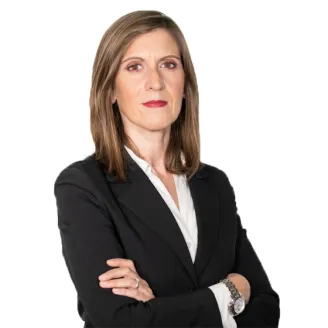
Vera Capperucci
vcapperucci@luiss.it
Instructional goals
The main goal of the course is to provide a critical background about the main topics in theory and history of political parties from the nineteenth century until the present.
Prerequisites
Advanced knowledge of contemporary history, with focus on the Italian contemporary history
Intended learning outcomes
Knowledge and understanding: the student will be able to knaw the origin ad transformation of contemporary political system and the influence that social, economic and cultural transformations have had on the organisation of the relationship between society and institutions. The reference methods are inductive, static and dynamic.
Ability to apply knowledge and understanding: the knowledge of the dynamics of histiry of political parties, in European perspecrive, will allow the student to develop a complexe thought based on a solid knowledge of the historical-political dynamics. The use of different interactive modalities will favour the acquisition of more interdisciplinary skills. The exercises, individual and in groups, will allow a constant monitoring of learning during the course and will offer the opportunities to use multimedia tools and test comminucation skills.
Making judgement: the student will acquire autonomy of judgement on the problems of the history of political parties, also in relation to specific application of the categories learned. The ability of judgment will be trasmitted through frontal lessons, individual ad group exercises.
Communication skills: the student wuill acquire the ability to communicate what they have learned during the lessons and to present the results of their research through the formula of public speaking in the classroom. Communicative skills will be assessed in the final oral test, in the classroom presentations and in the active participation in the lessons.
Learning skills: the student develops a more complex ability of independent and critical thinking. The learning will be enriched whit ad indepth study of topics specific to the history of poliical parties, with knowledge of languages and tools specific to the discipline, and verified through participation in debates and exercises and the conduct to final exam.
Course Contents
The course is divided in two parts. The first part will focus on the model of modern political party in the European political system from the nineteenth century until the World War I. By using comparative approach we will considered the case of Great Britain, France, Germany and Italy, as well as the relationships between liberalism, national state building, participation, parliaments, government, democracy and political parties. In this perspective, particular attention will be devoted to the relation between institution and political party in the totalitarianism experiences: Nazism, Fascism, and Communism. The second part will focus on the case study of the Italian political system from 1943 to 2008.
For the first part, there will be group and individual work to discuss the readings indicated in the teaching materials. For the second part, there will be group work on specific themes of the history of the italian republic.
Reference Books
1) M. Salvadori, Storia d'Italia. Il cammino tormentato di una nazione 1861-2016, Torino, Einaudi, 2018; 2) S. Rogari, Alle origini del trasformismo. Partiti e sistema politico nell'Italia liberale, Laterza, Roma-Bari, 1998; P. Carusi, I partiti politici italiani dall’unità ad oggi, nuova edizione aggiornata, Roma, Studium, 2008; 3) E. Gentile, Fascismo e antifascismo. I partiti italiani fra le due guerre, Le Monnier, Firenze, 2000; 4) P. Craveri, L'arte del non governo. L'inesorabile declino della repubblica italiana, Venezia, Marsilio, 2016; P. Scoppola, La Repubblica dei partiti. Evoluzione e crisi di un sistema politico, 1945- 1996, Il Mulino, Bologna, 1997.
Non attending students: A. Giovagnoli, Il partito italiano: la Democrazia Cristiana dal 1942 al 1994, Laterza, Roma-Bari, 1996; R. Gualtieri (a cura di), Il Pci nell'Italia repubblicana, Carocci, Roma, 2001; P. Mattera, Il partito inquieto: organizzazione, passioni e politica dei socialisti italiani dalla Resistenza al miracolo economico, Carocci, Roma, 2004; P. Ignazi, Il Polo escluso. Profilo storico del movimento sociale italiano, Il Mulino, 1998; M. Gervasoni, A. Ungari (a cura di), Le due repubbliche, Rubbettino, Soveria mannelli, 2014; M. Gervasoni, Storia d'Italia negli anni Ottanta. Quando eravamo moderni, Venezia, Marsilio, 2010; G. Orsina, La democrazia del narcisismo. Breve storia dell'antipolitica, Venezia, Marsilio, 2018.
Teaching Methods
- Lectures;
- Group work;
- Seminar and discussion
Assessment Method
- Final oral test: 60%
- Group work: 30%
- Seminar and discussion: 10%
Thesis assignment criteria
To pass the final exam with a suitable evaluation, and to show adequate interest in the topic
Week 1 Contenuto sessioni on line e on campus
On line: Introduction to the course. Methodological and historical questions. On campus: The modern political party. Sources: M. Salvadori, Storia d'Italia; S. Rogari, Alle origini del trasformismo; P. Carusi, I partiti politici italiani dall'unità ad oggi.
Week 2 Contenuto sessioni on line e on campus
On line: Liberalism and political parties (I); On campus: Liberalism and political parties (II). Sources: M. Salvadori, Storia d'Italia; S. Rogari, Alle origini del trasformismo; P. Carusi, I partiti politici italiani dall'unità ad oggi.
Week 3 Contenuto sessioni on line e on campus
On line: The political system in Italy (1861-1876). Sources: M. Salvadori, Storia d'Italia; S. Rogari, Alle origini del trasformismo; P. Carusi, I partiti politici italiani dall'unità ad oggi. On campus: The political system in Italy (1876-1889). Sources: M. Salvadori, Storia d'Italia; S. Rogari, Alle origini del trasformismo; P. Carusi, I partiti politici italiani dall'unità ad oggi.
Week 4 Contenuto sessioni on line e on campus
On line: The origins of socialist parties in Europe (I) (work group). Sources: M. Salvadori, Storia d'Italia; S. Rogari, Alle origini del trasformismo; P. Carusi, I partiti politici italiani dall'unità ad oggi. On campus: The origins of socialist parties in Europe (II). Seminar and discussion: "Maastricht and Europe Integration". Sources: M. Salvadori, Storia d'Italia; S. Rogari, Alle origini del trasformismo; P. Carusi, I partiti politici italiani dall'unità ad oggi.
Week 5 Contenuto sessioni on line e on campus
On line: Socialists parties in Europe (groups work). Sources: M. Salvadori, Storia d'Italia; S. Rogari, Alle origini del trasformismo; P. Carusi, I partiti politici italiani dall'unità ad oggi.
On campus: Catholics in Italy and in Europe (groups work). Seminar and discussion: "Mafia and State in Italy in Nineties". Sources: M. Salvadori, Storia d'Italia; S. Rogari, Alle origini del trasformismo; P. Carusi, I partiti politici italiani dall'unità ad oggi.
Week 6 Contenuto sessioni on line e on campus
On line: The consequences of World War I on european political systems (groups work). Sources: M. Salvadori, Storia d'Italia; E. Gentile, Fascismo e antifascismo.
On campus: The consequences of World War I on italian political systems (groups work). Seminar and discussion: "Tangentopoli and the crisi of italian political system". Sources: M. Salvadori, Storia d'Italia; E. Gentile, Fascismo e antifascismo.
Week 7 Contenuto sessioni on line e on campus
On line: The Italian political system after World War II (I) (groups work). Sources: M. Salvadori, Storia d'Italia; E. Gentile, Fascismo e antifascismo; P. Craveri, L'arte del non governo; P. Scoppola, La repubblica dei partiti.
On campus: The Italian political system after World War II (II) (groups work). Sources: M. Salvadori, Storia d'Italia; E. Gentile, Fascismo e antifascismo; P. Craveri, L'arte del non governo; P. Scoppola, La repubblica dei partiti.
Week 8 Contenuto sessioni on line e on campus
On line: The democratic transition in Italy after the fascism (groups work). Sources: M. Salvadori, Storia d'Italia, P. Craveri, L'arte del non governo, P. Scoppola, La repubblica dei partiti.
On campus: The italian politica system in '40s-'50s (groups work). Sources: M. Salvadori, Storia d'Italia, P. Craveri, L'arte del non governo, P. Scoppola, La repubblica dei partiti.
Week 9 Contenuto sessioni on line e on campus
On line: The Italian political system in the sixties (groups work). Surces: M. Salvadori, Storia d'Italia; P. Craveri, L'arte del non governo; P. Scoppola, La repubblica dei partiti.
On campus: The Italian plitical system in the seventies /group work). Sources: M. Salvadori, Storia d'Italia; P. Craveri, L'arte del non governo; P. Scoppola, La repubblica dei partiti.
Week 10 Contenuto sessioni on line e on campus
On line: The Italian political system in the eighties (I) (groups work). Sources: M. Salvadori, Storia d'Italia; P. Craveri, L'arte del non governo; P. Scoppola, La repubblica dei partiti.
On campus: The Italian political system in the eighties (II) (groups work). Sources: M. Salvadori, Storia d'Italia; P. Craveri, L'arte del non governo; P. Scoppola, La repubblica dei partiti.
Week 11 Contenuto sessioni on line e on campus
On line: The crisis of the italian political system (I) (groups work). Sources: M. Salvadori, Storia d'Italia; P. Craveri, L'arte del non governo; P. Scoppola, La repubblica dei partiti.
On campus: The crisis of the italian political system (II) (groups work). Sources: M. Salvadori, Storia d'Italia; P. Craveri, L'arte del non governo; P. Scoppola, La repubblica dei partiti.
Week 12 Contenuto sessioni on line e on campus
On line: The changes of politics in the "second republic" (groups work). Sources: M. salvadori, Storia d'Italia; P. Craveri, L'arte del non governo; P. Scoppola, La repubblica dei partiti.
On campus: populism, antipolitics, new parties (groups work). Sources: M. salvadori, Storia d'Italia; P. Craveri, L'arte del non governo; P. Scoppola, La repubblica dei partiti.