CORPORATE GOVERNANCE AND SUSTAINABILITY
Francesca Romana Arduino, Alessandro Zattoni
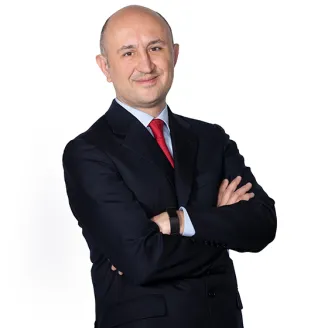
Alessandro Zattoni
azattoni@luiss.it
Instructional goals
Students attending this course can learn theories and models allowing them:
- to understand the link between corporate governance and sustainable success;
- to assess corporate governance practices and how they affect sustainable success in different companies;
- to design good corporate governance so to maximize sustainable success in a specific firm.
Prerequisites
Basic knowledge of management, strategy, accounting, organization, finance and corporate law.
Intended learning outcomes
Knowledge and understanding. The course will present theoretical frameworks and best practices to analyze corporate governance and sustainable success. Students should be able to understand the key corporate governance theories and topics presented during the course, and how they influence sustainable success.
Applying knowledge and understanding. Being exposed to different active learning teaching methods (e.g., incidents, cases, project works, videos), students will learn how: (i) to analyze the corporate governance practices of specific companies; (ii) to assess if and how these practices may address agency problems and foster sustainable success; (iii) to advance proposals aimed at improving the corporate governance of specific companies in order to positively affect sustainable success.
Making judgements. The use of active teaching methods will encourage students to collect and analyze data on corporate governance practices, so to assess their consequences on agency problems and sustainable success. Students will be also asked to present and explain their position on corporate governance practices of specific companies, and how they affect sustainable success.
Communications Skills. Thanks to lectures in class and reading the textbook at home, students will learn key concepts, theoretical frameworks and topics related to corporate governance and sustainable success. Moreover, during highly interactive sessions (e.g., incident, cases, videos, presentation of project work) they will present their position and defend it in front of the class.
Learning skills. The several teaching methods employed will allow students to develop a customized (i.e., “one size does not fit all”) approach in the analysis of the corporate governance practices and their influence on sustainable success. Thanks to high interactions in class, students will mature a critical assessment of their understanding of key concepts, theoretical frameworks and practices related to corporate governance and sustainable success.
Course Contents
Corporate governance; shareholders vs stakeholders view of the firm; purpose of corporations and sustainable success; corporate governance (CG) mechanisms; strategy, ownership and governance; international CG; ownership structure; board of directors; executive compensation.
Reference Books
Zattoni, A. (2020) Corporate governance – How to design good companies. Bocconi University Press, Milano.
Additional cases and presentations may be downloaded from LUISS Learn.
Teaching Methods
The course is based on a rich set of teaching methods, including lectures, videos, case and incident discussions, and a project work. Lectures are used to introduce participants to corporate governance theories, problems and mechanisms to maximize sustainable success. Videos are used to present real life cases of governance failure and their consequences on sustainable success. Case and incidents are used to refine the ability of participants to analyze real corporate governance and its implications on sustainable success. The project work is used to help students to improve their ability to collect, analyze, assess and present their view on the quality of corporate governance practices of a company and their potential positive or negative impact on sustainable success. Readings are a useful support to the learning experience in class.
Assessment Method
The final grade is the result of:
- a written exam (30%);
- a group work (50%);
- individual contribution to case discussion (20%, depending on the number and the value of individual contributions).
Thesis assignment criteria
pass the exam, read the report on MSc thesis, prepare a 1-2 pages project
Week 1 Contenuto sessioni on line e on campus
Corporate governance: introduction
Week 2 Contenuto sessioni on line e on campus
Shareholers vs stakeholders
Week 3 Contenuto sessioni on line e on campus
Agency problems
Week 4 Contenuto sessioni on line e on campus
Corporate governance mechanisms
Week 5 Contenuto sessioni on line e on campus
Strategy, ownership and governance
Week 6 Contenuto sessioni on line e on campus
Comparative corporate governance
Week 7 Contenuto sessioni on line e on campus
Ownership structure
Week 8 Contenuto sessioni on line e on campus
Board of directors
Week 9 Contenuto sessioni on line e on campus
executive compensation
Week 10 Contenuto sessioni on line e on campus
students' presentations
Week 11 Contenuto sessioni on line e on campus
Guest speaker
Week 12 Contenuto sessioni on line e on campus
wrap up