HISTORY OF THE ELITE BETWEEN TECHNOLOGY AND POLITICS
Alberto Mingardi
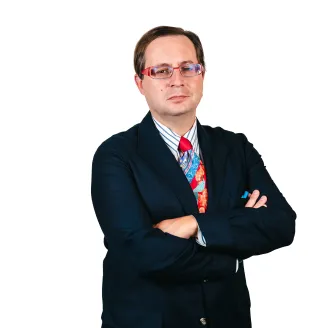
Alberto Mingardi
amingardi@luiss.it
Instructional goals
By the end of the course, students will have developed a knowledge of the central elements of elite theory (Mosca, Pareto); they will be able to apply its conceptual tools to different historical periods and contexts; and they will have reflected in particular on the role of science and technology as factors legitimizing political regimes. As transversal skills, the course will foster the participants' critical thinking and their capacity for intervention and discussion, through ad hoc discussions.
Prerequisites
None.
Intended learning outcomes
The final examination will assess the development of a certain familiarity with elite theory; an understanding of the historical context in which it is situated and the ability to apply its conceptual tools to the contemporary world; the comprehension of texts, the capacity for synthesis, and the ability to present complex arguments critically.
Course Contents
The course reconstructs a history of elites «between technique and politics». It begins from the tradition of political realism, which identifies the opposition between rulers and ruled as the fundamental fact of politics, and tests it against the question of whether technical or scientific competence confers a title to rule.
The first part of the course leads students to develop familiarity with the fundamental elements of elite theory, drawing in particular on Vilfredo Pareto's Treatise on General Sociology. Alongside the theoretical texts, a few pages of literature — Flaubert, De Roberto — give narrative flesh to the circulation and persistence of ruling classes.
The second part addresses the specific question of technique as a title to power: from Saint-Simonian technocracy and the religion of progress, to the planning of science and its totalitarian temptations, and finally to the liberal critique of planning (Hayek, Polanyi) and the analysis of interest groups and scientific institutions in a democracy (Buchanan, Eisenhower).
In the concluding classes, the course materials will be compared — through discussions and workshop-style exercises — with the circumstances closest to us, in order to test their usefulness for developing critical thinking about the contemporary world.
Reference Books
Elite Theory and Political Realism
J. Burnham, The Machiavellians: Defenders of Freedom (1943).
Vilfredo Pareto
Treatise on General Sociology (§§ 2053-2059, 2178, 2179-2204, 2237-2254); L'ignoranza e il malgoverno. Lettere a «Liberty», ed. A. Mingardi.
Literary Texts
G. Flaubert, Sentimental Education; K. Marx, The Class Struggles in France (1848–1850); G. Flaubert, Bouvard and Pécuchet; F. De Roberto, The Viceroys; Y. Zamyatin, We.
Technology and Political Legitimacy
H. de Saint-Simon, ‘Parable’ (from L'Organisateur; in G. Ionescu or K. Taylor, eds.); J.D. Bernal, ‘The Social Function of Science’ (1938); P.R. Josephson, ‘Projects of the Century’ in Soviet History: Large-Scale Technologies from Lenin to Gorbachev (Technology and Culture, 1995).
The Role of Experts: A Critical Reading
F.A. Hayek, ‘Planning, Science and Freedom’ (1941); M. Polanyi, The Contempt of Freedom (1940); J.M. Buchanan, ‘The Potential for Tyranny in Politics as Science’; D.D. Eisenhower, Farewell Address (1961).
Specific passages will be indicated during the lectures, and the relevant PDFs, where possible, will be posted on the course page. The instructor's slides will be posted after each class.
Teaching Methods
Classes will largely be lecture-based. Student participation will be encouraged, including in the synthesis, presentation, and discussion of the course materials. The concluding classes will involve the active engagement of students, in the form of an organized in-class debate.
Assessment Method
The examination will be oral. Active participation in class will be rewarded, with 1 additional point for those who have scored above 18/30.
The assessment will reflect the correct understanding of the course contents and the use of appropriate terminology. In assigning the grade, consideration will be given to the solidity of knowledge, clarity and precision of expression, the ability to develop critical arguments, and the ability to problematize the themes and the literature presented in class.
Thesis assignment criteria
Those interested can write to amingardi@luiss.it.
Week 1
Introduction to Elite Theory.
Introduction to the course. What political realism is, and in what sense there exists a «realist» tradition that studies effective power beyond its ideal justifications. We will examine the propositions common to the «Machiavellians» according to James Burnham — political class, elite, the iron law of oligarchy. We will reflect on whether elite theory is descriptive or also prescriptive, and on the role of organized minorities in a democracy.
Readings: James Burnham, The Machiavellians: Defenders of Freedom (1943), introduction «Politics and Truth» and concluding synthetic chapters (selection).
Week 2
Pareto I: Force and Power.
We will reflect on the link between the use of force and power. The course material (Pareto's Treatise on General Sociology) makes it possible to address the relationship between force and consent, the alternation of «foxes» and «lions», and the willingness (or not) of an elite to use force to preserve itself.
Readings: Vilfredo Pareto, Treatise on General Sociology, §§ 2179-2204.
Week 3
Pareto II: Politics and Psychology.
We will place elite theory in a broader context and ask about the limits of rational calculation in politics. From Pareto's Treatise we will address the distinction between rulers and ruled, the reflection on the psychological mechanisms that sustain power, and the role of ‘derivations’ in justifying it.
Readings: Pareto, Treatise on General Sociology, §§ 2237-2254.
Week 4
Pareto III: The Circulation of Elites.
The theme of the circulation of elites — the alternation of the classes in power — will be introduced, also drawing on the reflections developed on rationality in politics.
Readings: Pareto, Treatise on General Sociology, §§ 2053-2059 and 2178; review of §§ 2179-2204 and 2237-2254 discussed previously.
Week 5
Elite Theory as a Description of Bourgeois Government (I)
The elite theory presented in the previous classes will be tested as a description of a ‘liberal-bourgeois’ regime, between demagogic plutocracy and trasformismo. We will look at Pareto's account of the ‘functionary’ involution of the bourgeoisie and the blurring of parties into a single power bloc. To engage with Italian history, we will read the closing speech of Consalvo Uzeda from Federico De Roberto's The Viceroys.
Readings: V. Pareto, L'ignoranza e il malgoverno. Lettere a «Liberty» (ed. A. Mingardi), selected pages; F. De Roberto, The Viceroys, Consalvo's closing speech (Part III).
Week 6
Elite Theory as a Description of Bourgeois Government (II)
Elite theory will be compared with another historical example: France under the July Monarchy in its decline. Through a few pages of Flaubert we will examine the defeat of popular mobilization and the re-settling of the ruling classes, in the historical context of France in the 1840s.
Readings: G. Flaubert, Sentimental Education, Part III, chs. 1-3; K. Marx, The Class Struggles in France (1848–1850), selected pages.
Week 7
The Primacy of Technique: The Elite for Progress
We will examine the origin of the technocratic claim (knowledge as legitimation of access to governing power) and its satire. In particular, we will outline Henri Saint-Simon's ideas on the superiority of the productive and scientific elite over the political-aristocratic one. Can the key to political legitimacy lie in the opposition of producers versus idlers, competence versus birth? What are the possible reverses of the religion of progress applied to political power?
Readings: H. de Saint-Simon, ‘Parable’ (from L'Organisateur, 1819; in G. Ionescu or K. Taylor, eds.); G. Flaubert, Bouvard and Pécuchet, ch. II.
Week 8
Science in Totalitarian Regimes
We will examine the use of scientific justification of power, as it served totalitarian regimes. Reading Bernal, we will address the question of science «frustrated» by capitalism and, conversely, freed by planning, with an eye to the Soviet model. Josephson's essay will allow us to explore some of the historical consequences of this attitude, with respect to the large-scale projects undertaken by the Soviet government. A few pages of Zamyatin will serve to address the question of scientific utopia as a device of control.
Readings: J.D. Bernal, ‘The Social Function of Science’ (Modern Quarterly, 1938); P.R. Josephson, ‘Projects of the Century’ in Soviet History: Large-Scale Technologies from Lenin to Gorbachev (Technology and Culture, 1995); Y. Zamyatin, We, selected Records.
Week 9
The Critique of Planning
We will address the liberal reply to the idea of the need for a ‘scientific’ government, which instead leads us to regard the freedom of science as a case of spontaneous order. The essays by Hayek and Polanyi prompt us to ask whether the planning of science threatens its very autonomy, and whether science itself must be a self-governing republic.
Readings: F.A. Hayek, ‘Planning, Science and Freedom’ (Nature, 1941); M. Polanyi, The Contempt of Freedom (1940).
Week 10
Experts as Political Actors.
We will address how experts themselves become a pressure group in contemporary society. Are experts, or can they be, neutral? How does their scientific-academic profile contribute to their capacity to steer public decisions? Are they the true elite of our time? The discussion of a text by James M. Buchanan will be paired with Dwight Eisenhower's farewell address, which contains the two famous warnings — on the «military-industrial complex» and the capture of public policy by a «scientific-technological elite».
Readings: J.M. Buchanan, ‘The Potential for Tyranny in Politics as Science’ (Collected Works, vol. 17); D.D. Eisenhower, Farewell Address (1961).
Week 11
On the basis of the materials discussed in the previous classes, an in-class discussion will be developed — also in the form of a debate among students — in order to test their relevance as tools for reading the present.
Students will be encouraged to bring to their colleagues' attention materials (scholarly papers or newspaper articles) that can feed the discussion.
Week 12
On the basis of the materials discussed in the previous classes, an in-class discussion will be developed — also in the form of a debate among students — in order to test their relevance as tools for reading the present.
Students will be encouraged to bring to their colleagues' attention materials (scholarly papers or newspaper articles) that can feed the discussion.