CLIMATE - NEUTRAL & SMART CITIES
Fernando Christian Iaione
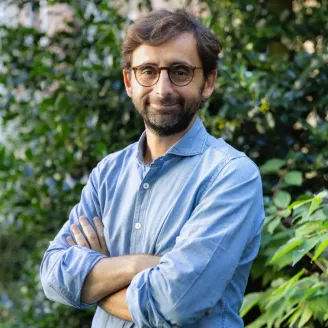
Fernando Christian Iaione
ciaione@luiss.it
Instructional goals
The course is aimed at investigating aspects related to the emerging outlook of "Smart Cities". The course will offer students the chance to learn through a research-based, applied learning perspective how to read, understand and design from scratch the legal tools that are often adopted by city governments to govern smart cities through public, public-private and even public-private- community collaboration. The course will address the opportunities and challenges connected with smart cities from a legal, policy, political economy perspective and though different issues: urban climate justice; substainable mobility; energy; new forms of housing; human rights and gender/intersectional perspectives; tech justice; data protection; IP law; tech transfer; PropTech.
Prerequisites
No prerequisites
Intended learning outcomes
Knowledge and understanding: The aim of this course is to provide a complete basic knowledge of the relevant discipline and case law guidelines and the innovations in the urban law, with a particular reference to the smart cities.
The course will offer key theoretical tools to understand current trends affecting cities around the world, from the urbanization to climate change processes and their consequences in cities (the need to rethink urban transport, urban infrastructures, housing etc), to the new policy frontiers (smart cities, smart sustainable cities, urban tech and IoT in cities, climate
policies etc). This course provides advanced knowledge and analytical resources that will enable students to understand the processes that are taking place in cities around the world, the policies that cities are developing in order to face local and global issues, their content and consequences, and the techniques adopted in cities to study and evaluate regulatory innovations, to write city regulations and grant applications. The acquisition of this knowledge will be tested through a practical creation of an output during the labs. •examine concrete case studies of city laws by conducting scientific research;
•look at how city institutions shape, constrain and enable policy making;
•write a grant application for an urban project (e.g. Urban Innovative Actions, Urbact, Horizon Europe etc.);
write an Urban Policy (i.e. an urban plan; a city strategy; a Regulation).
Making judgements:
We expect students to be able to analyze urban laws and policies and concrete urban projects to demonstrate an indepth,
critical understanding of the scope and challenges of such policies and projects.
They are expected to be able to discuss and evaluate key urban innovation policies and to identify concrete solutions to challenges faced by cities and mayors around the world.
Throughout the whole course, students will be invited to critically analyze the challenges that cities and mayors around the world are facing and their consequences, in order to understand which are the innovations to be adopted. Furthermore they will be invited to study and write a grant application/regulation/research paper on projects/policies facing the above mentioned challenges.
Applying knowledge and understanding:
The students will be able to:
•understand the connections between global issues and local (city level) solutions and the interconnections between cities and their regional environments;
Communications Skills:
This course will give the students the possibility to acquire and understand major terms and concepts in order to communicate their ideas, proposals, analysis and critical reasoning in the field of urban law and of the innovation in cities in the most effective and appropriate way.
Learning skills:
This course will contribute to empower learners giving them the tools to determine why certain innovative urban
policies are followed and others are not and to evaluate the interconnections between global and local problems, the solutions of urban innovation adopted and their consequences on urban inhabitants and cities.
Course Contents
The course will first introduce student to the concept of smart cities from a climate neutrality and justice perspective (social; tech; climate justice).
Then, it will address the most controversial feature of smart cities city governance in terms of urban planning, IP law, tech transfer and PropTech, data protection through the lenses of the most recent legislative and public policy innovations at European, national, regional and local level. During the course particular emphasis will be given to the new ways of conforming the soils through consensual and solidarity urban planning tools, urban and compensatory equalization, urban regeneration, sustainable development, innovation and smart cities.
During the course, the student will produce as an output the outline or draft of a model “Climate Neutral and Just Smart City policy” in an EU city based on what they have learned.
The exact type of policy will be co-designed with students. It could be an Urban Masterplan, a but It would cover: a) what should be the goals of the smart city? b) who should be involved in designing and implementing the vision of the smart city? c) how would you involve different interests and stakeholders in the governance of the smart city?
Reference Books
The course does not foresee one handbook or book. Every week and for every topic addressed, the course instructor will assign readings to the class. The readings will be posted on the learn.luiss platform.
Examples of potential readings are:
- Ellen P. Goodman, ‘‘Smart Cities’’ Meet ‘‘Anchor Institutions’’: The Case of Broadband and the Public Library, 41 FORDHAM URB. L.J. 1665 (2014);
- Mariana Mazzucato, The Entrepreneurial State: debunking public vs. private sector myths (Anthem, 2013);
- Sofia Ranchordas and Mattis van't Schip. "Future-Proofing Legislation for the Digital Age." Time, Law, and Change (Hart, 2020); [also available here]
- Christian Iaione, Elena De Nictolis, and Anna Berti Suman. "The internet of humans (IoH): Human rights and co-governance to achieve tech justice in the city." Law & Ethics of Human Rights 13, no. 2 (2019): 263-299;
- Kathleen Garnett, Geert Van Calster & Leonie Reins (2018) Towards an innovation principle: an industry trump or shortening the odds on environmental protection?, Law, Innovation and Technology, 10:1, 1-14;
- Peter Lee, Social Innovation, Washington University Law Review, Vol. 92, No. 1, 2014, UC Davis Legal Studies Research Paper No. 407;
- P.D. Aligica and V. Tarko, Polycentricity, Governance: An International Journal of Policy, Administration, and Institutions, Vol. 25, No. 2, April 2012 (pp. 237–262);
- Emilie C. Schwarz, Human vs. Machine: A Framework of Responsibilities and Duties of Transnational Corporations for Respecting Human Rights in the Use of Artificial Intelligence, 58 Colum. J. Transnat'l L. 232 (2019);
- Dacian C. Dragos; Bianca Racolta, Comparing Legal Instruments for R&D&I: State Aid and Public Procurement, 12 Eur. Procurement & Pub. Private Partnership L. Rev. 408 (2017);
- Beatriz Martinez Romera; Roberto Caranta, EU Public Procurement Law: Purchasing beyond Price in the Age of Climate Change, 12 Eur. Procurement & Pub. Private Partnership L. Rev. 281 (2017);
- van Winden, W., & de Carvalho, L. (2018). Can startups solve urban problems? An analysis of Amsterdam's "Startup in Residence" programme. Amsterdam: Hogeschool van Amsterdam;
- Fabrizio Clermont; Francesco Fionda, A Modern Approach for Procuring Research and Innovation: The Pre-Commercial Public Procurement, 11 Eur. Procurement & Pub. Private Partnership L. Rev. 88, (2016);
- Johan Wolswinkel, Concession Meets Authorization: New Demarcation Lines under the Concessions Directive, 12 Eur. Procurement & Pub. Private Partnership L. Rev. 396 (2017);
- Adam J. Kolber, Not-So-Smart Blockchain Contracts and Artificial Responsibility, 21 Stan. Tech. L. Rev. 198 (2018);
- Claire Henly; Sam Hartnett; Buck Endemann; Ben Tejblum; Daniel S. Cohen, Energizing the Future with Blockchain, 39 Energy L.J. 197 (2018);
- European Green Deal COM(2019) 640;
- EU Taxonomy Regulation (Regulation (EU) 2020/852 of the European Parliament and of the Council of 18 June 2020 on the establishment of a framework to facilitate sustainable investment);
Teaching Methods
The course will include research-based seminars/lectures on key topics in smart cities.
In addition,part of the course will consist of a legal design
, in which students will produce a by the end of the course a group " City Contract" paper.
Assessment Method
Evaluation method: 20% attendance- 20% paper presentation - 20% active participation - 30% final output- 10% final output discussion.
This course does not foresee mid-term exam.
Students that do not attend the course (i.e. Erasmus students) will be evaluated through the empirically based case study analysis (between 10 to 20 pages). Students that do not attend the course are invited to send an email to the teaching staff at least 45 days before the examination session starting date, to define the outline and methodology for the case study analysis.
Thesis assignment criteria
Interest in the subject
Week 1 Contenuto sessioni on line e on campus
The concept of smart city between Climate Neutrality and Justice.
What are smart cities? Different definitions of smart cities. The multi- dimensional features of smart cities in different urban contexts.
The class will provide an overview of different urban visions behind the concept of smart cities, including the tech-based cities; the eco-cities; the sharing-cities, where the sharing economy and social infrastructures are pivotal. Cities worldwide are experimenting with policies that are inspired by the idea of sharing and the commons. These cities are emerging in ways that demonstrate some of the pillars of our urban collaborative model. An example is the now well-recognized “sharing city,” which applies such features embedded within the idea of urban collaborative democracy, particularly on a neighborhood scale and is based on policy strategies that stimulates and support the sharing economy.
The second class will be devoted to the explanation of the working method of the course. The class will also explain the final output that students will present as a final project work. The class will include examples as well as a practical demonstration of the empirical exercise that the students will carry out. The outline and timeline of the exercise, including the expected date of the class presentation and the details about the final case study analysis will be uploaded in the learn.luiss platform.
Week 2 Contenuto sessioni on line e on campus
This lecture consists of an analysis and discussion of Nature-Based Solutions (NBS), solutions to urban and social challenges inspired and supported by nature: green roofs and walls, urban forests, alternative stormwater management systems, urban agriculture. They are cost-effective and at the same time provide numerous environmental, social and economic benefits, as well as helping to increase resilience.
Environmental resilience and adaptation to climate change are now based on Nature-Based Solutions: that is, on all those solutions that combine existing concepts such as green infrastructure, green-blue network, ecosystem services, natural capital, ecological engineering in an innovative way.
This is a new concept that has been in use for a few years now by the European Commission, which in a 2015 study first defined it as: "a useful tool to pursue objectives such as increasing the sustainability of urban systems, restoring degraded ecosystems, implementing climate change adaptation and mitigation, and improving risk management and implementing resilience".
For the EUCN (European Union for the Conservation of Nature), nature-based solutions are also actions to protect, manage or restore ecosystems in a sustainable way, which provide benefits for human well-being and biodiversity'.
Week 3 Contenuto sessioni on line e on campus
Week three will discuss the food/recycling system that is defined in the city. In fact, having lost its industrial and productive nature, the city has been conceived primarily as a place of consumption of material goods produced elsewhere and thus a source of troublesome waste. In recent years, cities have been asked to reduce the need for inputs or to better manage the by-products of these consumption processes. Reuse, efficiency, recovery, circularity have emerged as key concepts.
We will delve into the state of the art in terms of lack of primary resources and deterioration of ecosystems and compare international food, water and waste policies and strategies in search of solutions in Europe, Africa and Asia. A new paradigm is emerging: from the consumption city to the circular city.
Week 4 Contenuto sessioni on line e on campus
Contemporary cities are a site of multiple cross-border activities, from the inward and outward movement of goods, capital, services, and persons, up to the constant flow of digital data. However, the current legal landscape concerning the power of cities to govern non-residents is deficient. The nation-state’s continuing dominance, both in the domestic division of power, and in the international arena, often results in a mismatch with the physical and digital reality of current cities. Even though cities are acting practically beyond territorial and resident-based boundaries, a formal overhaul in city-state-international governance powers is unlikely soon.
The normative case for allowing cities to exert their property rights in assets in a differential and creative manner to account for their current cross-border reality is particularly strong when cities remain otherwise committed to promoting intra-local and inter-local openness, diversity, and tolerance. Much of the concern about parochialism derives from exclusionary practices of suburbs or private communities. Cities are - and should be - different. Allowing cities to harness property rights may aid them in addressing their mounting challenges while remaining open and accessible.
Week 5 Contenuto sessioni on line e on campus
Specific attention will be paid to the social, legal and ethical implications of AI and emerging technologies on fundamental rights of citizens, such as dignity, non-discrimination, safety, democracy and privacy. In addition, the role of legal regulation (AI Act Proposal, data protection legislation, anti-discrimination law), soft-law instruments (codes of conduct, ethical principles) and civil society initiatives (human rights activists, citizen participation) will be discussed.
Week 6 Contenuto sessioni on line e on campus
The class will touch upon regulatory and policy implications of smart mobility solutions in the urban context and their impact on the development of sustainable and resilient urban mobility. The role of European initiatives, including the European common mobility data space, NAPCORE, Sustainable and Smart Mobility Strategy, New Uban Mobility Framework, Sustainable Urban Mobility Plans and Urban Vehicle Access Regulations, will be discussed. Finally, local approaches aimed at tackling traffic congestion and air polution, achieving climate neutrality and implementing multimodal and active mobility modes will be addressed.
Smart Mobility is a tool for achieving sustainable city development. The term encompasses a number of elements: technology, mobility infrastructures (parking, charging networks, signage, vehicles), mobility solutions (including new mobility models) and people. Smart mobility aims to offer a seamless mobility experience, from the first to the last mile, that is flexible, integrated, safe, on demand and affordable. Urban mobility can be innovated through new mobile technologies and applications capable of integrating public transport, better infrastructure and car sharing (or vehicle sharing). Smart Mobility also means green, whether it's electric cars or cycle paths.
To support the transition to cleaner, greener, and smarter mobility, in line with the objectives of the European Green Deal, the Commission in December 2021 adopted four proposals that will modernise the EU’s transport system. By increasing connectivity and shifting more passengers and freight to rail and inland waterways, by supporting the roll-out of charging points, alternative refuelling infrastructure, and new digital technologies, by placing a stronger focus on sustainable urban mobility, and by making it easier to choose different transport options in an efficient multimodal transport system, the proposals will put the transport sector on track to cutting its emissions by 90%.
Week 7 Contenuto sessioni on line e on campus
The next lectur explore the relation and importance of bio-economy in the life sciences to achieve sustainable development goals. Governing bio-economy within the EU has required from an extensive regulatory “package” among these, the EU Circular Economy Action Plan – is considered to be one of the main blocks of the European Green Deal that encompasses Europe’s new agenda for sustainable growth. While bio-economy used to be exclusively linked to biotechnology, in recent times the concept has expanded to all areas and sectors involved in the production and use of bio-resources. From the city perspective, SDG 11 targets to make cities and human settlements inclusive, safe, resilient and sustainable. To achieve this the EU has foreseen a series of actions or measures in relation, for instance to waste at the city level within the EU Circular Economy Plan. Transforming waste into energy sources or higher value chemicals requires from both innovation policy and policy innovation. Thereafter, in the first lecture we will address the concept of bio-economy, innovation policy and policy innovation within the context of EU’s Green De
Week 8 Contenuto sessioni on line e on campus
P and cities are interconnected in various ways and can influence each other. Cities can thrive as centres of innovation and culture through IP protection, while IP can contribute to the economic and cultural success of cities. The effective management of this relationship requires a balance between protecting intellectual property rights and promoting innovation and knowledge sharing.
Week 9 Contenuto sessioni on line e on campus
Health and climate change are closely linked as climate change can have a significant impact on human health.
Climate change can influence the spread and prevalence of infectious diseases. Climate change can increase the formation of air pollutants, such as ground-level ozone, which can have negative effects on human respiratory health. Air pollution can worsen the condition of people with chronic respiratory diseases such as asthma and increase the risk of cardiovascular disease.
In conclusion, climate change has a direct impact on human health through multiple mechanisms. It is crucial to address climate change not only to protect the environment, but also to preserve the health of global communities. Promoting environmental sustainability and effective health policies are both crucial in addressing this complex challenge.
Week 10 Contenuto sessioni on line e on campus
Is a sustainable city a Smart City or, conversely, is a Smart City a sustainable city? The answer is, in a sense, related to the concept of sustainability. If one sees it only in relation to the environment issue, as essential as it is for proper urban development, it is certainly not the only aspect to be considered. Trivially, thinking about the definition of a Smart City, i.e., an intelligent city, one immediately discovers the complexity that distinguishes all cities. The Smart City paradigm, in fact, is based on the idea of implementing projects and actions in different areas and dimensions that, taken together, constitute the city as a whole. When we talk about Smart City, in fact, we refer to issues such as the Internet of Things, new models of governance, efficient building, evolved services, alternative mobility, quality of life and sustainability. Moreover, each of these dimensions can in turn serve or combine with others, as in the case of technology and digitization, with applications ranging from traffic management to environmental protection. What is the relationship, then, between Smart City and sustainable city?
Week 11 Contenuto sessioni on line e on campus
Across regions and cities in the European Union, culture is highly valued by residents and visitors alike. Cultural and creative industries (CCIs) are also a vital asset for regional economic competitiveness and attractiveness, while cultural heritage is a key element of the image and identity of cities and regions and often times the focus of city tourism.
The 2018 New European Agenda for Culture of the European Commission recognises that cities and regions across the EU are at the forefront of culture-led development and constitute natural partners for experimentation, anticipating trends and exploring models of social and economic innovation.
Week 12 Contenuto sessioni on line e on campus
the last week of the course there will be the presentation of the city contract - the group work that the students have been working on throughout the semester.