Luiss Undergraduate School
Building tools to understand change: the mission of the Undergraduate School
Building tools to understand change: the mission of the Undergraduate School
"We want students to learn to take an active role in their own learning journey, tackling real-world problems and engaging with various stakeholders to develop their methodology and critical thinking."
We develop three-year and single-cycle degree programs designed to provide a solid foundation in the fields of economics, management, political science, law, and artificial intelligence.
The Undergraduate School was created as a dynamic space for discussion and experimentation, an incubator of ideas where students build their own “toolkit”: a wealth of skills, methodological rigor, and critical thinking abilities to understand change.
This vision forms the foundation for an educational model inspired by Engaged Learning, which combines theoretical learning, practical application, and addressing real-world problems to create a positive impact. Critical thinking, problem-solving, creativity, and digital skills become integral to the learning journey, including through project-based activities and pathways designed to formally recognize core competencies needed to navigate ever-changing environments.
Through ENGAGE.EU, we participate in a European network dedicated to developing innovative models for higher education and academic collaboration with leading international partners.
Academic governance focused on educational innovation
The Undergraduate School brings together the three-year Bachelor’s Degree programs and the single-cycle Master’s Degree program in Law under integrated and coherent governance, promoting academic quality, interdisciplinarity, and the continuous development of the educational experience.
The Dean, the Directors of the Programs of Study, and the School's governing bodies help shape the strategic direction of the Undergraduate School through ongoing dialogue with students, faculty, institutions, and international networks.
The School also draws on two key advisory bodies:
the International Advisory Board, comprised of globally renowned academics from leading institutions in the social sciences, which helps strengthen the School’s competitiveness and international reach;
the Institutional & Corporate Advisory Board (ICAB), composed of influential representatives from the worlds of institutions, business, and the professions.
Regular dialogue with these bodies guides the School’s positioning, supports the development of its educational offerings, and helps ensure they align with changes in the world of work and contemporary society.
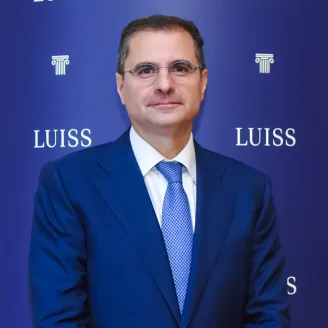
Antonio Gullo

Rumen Ivaylov Pozharliev

Giovanna Vallanti
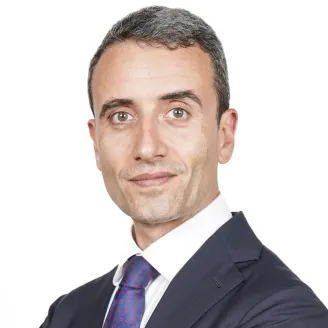
Paolo Spagnoletti

Bernardo Giorgio Mattarella
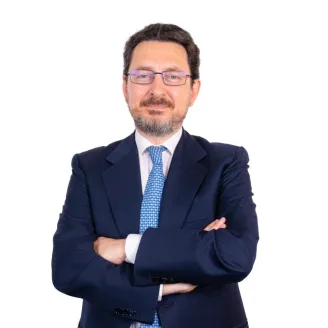
Aldo Sandulli

Cristina Fasone

Maria Rita Testa
An interdisciplinary educational architecture and a future-oriented educational model
We design programs that integrate core skills, interdisciplinary approaches, and hands-on experiences into flexible, customizable learning journeys.
AI literacy, the humanities, and cross-disciplinary skills
Across all programs in the Undergraduate School, we integrate AI literacy, the humanities, and the development of cross-cutting skills as the cornerstones of the educational experience, regardless of the chosen field of study.
Through modules dedicated to AI literacy, students acquire fundamental theoretical and practical skills to understand the opportunities, risks, and ethical implications of emerging technologies. This is achieved through approaches focused on experimentation, critical analysis, and collaboration with partner companies.
At the same time, the humanities track emphasizes disciplines such as history, philosophy, semiotics, and ethics. These courses provide the interpretive tools needed to understand economic and social phenomena, strengthening students’ analytical skills and independent judgment.
This ecosystem is rounded out by structured activities for the formal recognition of soft skills, providing cultural, methodological, and relational tools that are immediately applicable in a wide range of professional contexts, both nationally and internationally.
Challenges, legal clinics, and hands-on experiences
From day one, we put students to the test through interdisciplinary challenges, project work, and collaborations with companies, institutions, and NGOs, building hands-on experience in real-world scenarios.
Challenges provide a dynamic, collaborative approach between the university and the outside world: interdisciplinary groups of students work together to develop innovative solutions to real-world problems submitted by partners of national and international significance.
As part of the Law Degree Program, legal clinics provide an outstanding experience where theoretical learning meets the practice of law. Students have the opportunity to analyze and handle real legal cases, working closely with lawyers, judges, and experts in the field, thereby developing professional ethics and social awareness. These programs foster a collaborative learning model involving students, faculty, and external stakeholders, seamlessly integrating classroom instruction with real-world impact on society and the economy.
Engaged Learning and Future-Oriented Education
We start with a clear conviction: today, higher education cannot be limited to merely imparting knowledge. It must anticipate future needs by training individuals who can take responsibility, collaborate within multicultural teams, and make a lasting impact.
That’s why we embrace an approach inspired by Engaged Learning, where students are at the active center of their academic journey and co-creators of knowledge. The model also fosters student growth through a system of continuous assessment, encouraging active participation and ongoing dialogue with faculty from the very first weeks of class.
The goal is not simply to prepare students for the job market, but to help shape individuals who are aware, flexible, and ready to act responsibly in complex and changing environments.
Valuing merit and excellence is an integral part of the Undergraduate School’s educational model: dedicated programs, such as the Honours Programmes, offer the most motivated and brilliant students unique opportunities for scientific exploration, interdisciplinary learning, and advanced discussion.

International experience and a global outlook
We've built an international ecosystem that connects students, faculty, partner universities, businesses, and institutions in a continuous space for discussion, mobility, and collaboration.
Courses taught entirely in English, Erasmus+ exchange programs and those with non-European locations, Double and Triple Degrees, LLM Educational Programs, Free Movers, and Summer Schools abroad—all recognized within the Luiss curriculum—offer the opportunity to enrich one’s academic career by integrating different university systems, cultures, and geographical perspectives.
Internationalization is a hallmark of the Undergraduate School: the expansion of English-language course offerings, the establishment of a student community from around the world, and a network of over 364 partner universities in 77 countries create a multicultural, inclusive environment focused on fostering dialogue among different perspectives, cultures, and academic systems.
Through our active participation in the ENGAGE.EU Alliance, we offer our students a wide range of international opportunities, from innovative virtual and flexible mobility options to more traditional exchanges. Even during their three-year or single-cycle programs, students can take top-notch courses offered online and in person by leading European partner universities within the network.
The Undergraduate School guides students as they thoughtfully build and plan their future paths, which may include continuing their studies, pursuing high-profile international experiences, and making their first forays into the professional world.
Master’s degree programs, the Graduate Summer School, and postgraduate specialization courses represent the natural progression from an undergraduate journey within an integrated educational ecosystem with a global focus.
Ongoing engagement with employers, institutions, and professional networks also allows students to progressively develop a greater awareness of their interests, the skills they have acquired, and potential future directions, thereby enhancing the interdisciplinary and international dimension of the undergraduate program.
Career Day, recruiting activities, dedicated programs, company presentations, and testimonials from the global alumni community help maintain an ongoing dialogue with the world of work and expand professional prospects even during the university experience.
