
SOCIOLOGY OF GLOBAL POLITICS
Thomas Christiansen, Christian Georg Maximilian Joppke
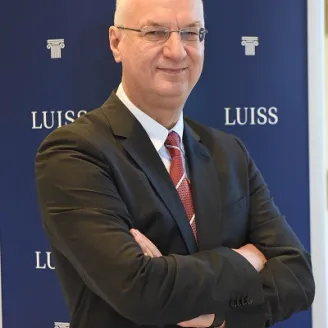
Thomas Christiansen
tchristiansen@luiss.it
Obiettivi formativi
This course examines the European Union’s role in global politics from a sociological perspective. It explores how globalization, migration, identity, and geopolitics influence Europe’s external actions, while also considering how Europe responds to global transformations.
Prerequisiti
Proficiency in spoken and written English
Basic knowledge of the history, institutions and policies of the European Union
Risultati di apprendimento attesi
Upon completion of the course, students will be able to:
Critically evaluate the interplay between international norms, migration and the process of globalization
Acquire a good knowledge of the variety of relations the EU maintains with the major powers and key regional organisations across the globe
Have awareness of the opportunities and limitations for EU external action, in particular with regard to the inter-relationship between economic, security and normative considerations
Be able to identify the main driving forces in EU external relations and to critically examine the challenges and opportunities confronting the EU in an emerging multipolar world
Contenuti Del Corso
The course introduces students to the main concepts in globalization, migration and EU integration as well as the history and institutions of EU foreign policy making. It then examines in more detail Europe’s role in key area of global governance (migration, trade, technology) as well as its relations with major powers and key regions around the world.
Testi Di Riferimento
S. Keukeleire & T. Delreux, The Foreign Policy of the European Union, Palgrave (2014)
C. Hill, M. Smith, & S. Vanhoonacker (eds), International Relations and the European Union, OUP (2017)
J. Ikenberry, End of the Liberal International Order?, OUP (2019);
Ikenberry, “Three Worlds”, Wiley‑Blackwell for International Affairs (2024)
Giddens, The Consequences of Modernity, SUP (1990).
Additional readings assigned per lecture (see forthcoming Syllabus on LUISS Learn)
Metodologie Didattiche
The course combines several educational formats, specifically lectures, student debates and classroom discussion. The emphasis is on interactive and problem-based learning. Sessions will feature lectures by the instructor (ca.45mins) which will present key developments in the field and in the literature and raise questions and problems for subsequent discussion. The remainder of the session will then be devoted to classroom discussion addressing these questions, and any other points that students may want to raise. There will also be sessions during which groups of students – having worked together to research the topic – will debate key questions and raise points for subsequent classroom discussion.
Modalità di verifica dell'apprendimento
The course will be assessed through a combination of continuous assessment of student participation and a final invigilated exam.
Criteri per l’assegnazione dell’elaborato finale
Min 29/30
Settimana 1
Introduction to the course; Lectures on the theme of globalization and sociology
Settimana 2
Lectures on migration and the liberal international order
Settimana 3
Lectures on the theme of EU integration and multiculturalism
Settimana 4
Lectures on the theme of migration and European citizenship
Settimana 5
Lectures and debates on the role of EU normative power
Settimana 6
Lectures and debates on the theme of EU Relations with the US
Settimana 7
Lectures and debates on the theme of EU Relations with Russia
Settimana 8
Lectures and debates on the theme of EU Relations with China
Settimana 9
Lectures and debates on EU’s role in global politics
Settimana 10
Lectures and debates on the theme of EU External Relations
Settimana 11
Lectures and debates on the theme of EU trade and investment policy
Settimana 12
Lectures and debates on the theme of the EU relations with the Global South
Conclusions and debriefing conversations.