
ACADEMIC AND PROFESSIONAL COMMUNICATION SKILLS
Maria Christine Hillan, James William Egerton
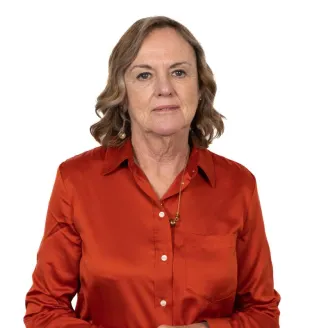
Maria Christine Hillan
mhillan@luiss.it
Obiettivi formativi
The purpose of this course is to provide students with support in order to improve their academic and professional communication skills and enhance their ability to effectively structure their discourse, be it oral or written.
By focusing on key areas directly related to their degree course, students develop their academic writing and public speaking skills, critical thinking and virtual literacy.
Presenting well-substantiated argumentation will be a key focus.
The interactive, hands-on approach engages students in situations where they gain awareness of the tools available to improve their communication skills, both in terms of structure and delivery, and then apply them. Short debriefing sessions allow students to assess their performance and to take advantage of the constructive feedback offered by their peers in view of fine-tuning and adopting best practices.
Particular focus is given to the Virtual Communication skills in high demand today.
Prerequisiti
To optimize the outcomes of this course, students should possess an advanced level of English. For students with a English proficiency of lower than C1.1, a Grammar Refresher Course is offered to consolidate language proficiency.
Risultati di apprendimento attesi
Knowledge and understanding: Students will be introduced to the issues related to communicating effectively in academic and professional contexts. Through critical analyses of written and oral discourse, they will gain awareness of the tools and strategies available to improve their public speaking and academic writing skills. Focus will be given to how to structure clear and concise argumentation, in particular relating to issues linked to Policies and Governance in Europe. In addition, students will comprehend the importance today of developing a digital identity and adapting their speaking skills to communicating online.
Applying knowledge and understanding: Students will apply the acquired communication strategies to real-life situations such as presentations, debates, online interviews, thesis-driven writing, and other academic/professional tasks. They will use the methods acquired to demonstrate their mastery to devise and sustain clear, coherent argumentation.
Making judgements: The course materials are designed in such a way as to encourage comparison and evaluation of alternative sources, stances and text organization, and to express resultant conclusions in a language and form appropriate to the specific context.
Critical analysis, self-evaluation and synthesis will allow students to independently fine-tune and adapt their skills to deal with new tasks.
Communication skills: At the end of the course, students will be able to use the appropriate lexical range, accuracy and appropriacy to operate effectively in contexts linked to their degree course and future career. They know how to structure their ideas coherently and adapt their discourse depending on the purpose and context. They are able to communicate effectively with their peers and the broader academic/professional community, conveying their conclusions clearly and unambiguously, and providing relevant supporting arguments. Moreover, they are at ease in digital contexts such as online job interviews, remote conferences, etc leveraging their verbal and non-verbal skills.
Learning skills: By putting into practice the methodologies learned during the interactive lectures and seminars, students will learn to assess their own performance in view of fine-tuning the acquired strategies when faced with tasks related to their academic and professional careers.
Contenuti Del Corso
Public Speaking and Academic Writing Skills with a particular emphasis on Virtual Communications in contexts related to post graduate work
Testi Di Riferimento
Specially-designed, degree-related teaching materials based on materials from selected academic sources (Harvard Business Review, University of Leeds, INSEAD, europa.eu, and other academic sites) All materials published on Luiss Learn
Metodologie Didattiche
Each session is broken down into the following focal points:
a) Awareness-raising:
b) Input in the form of videos or texts which ask students to analyse examples of communication in order to assess the effectiveness and spot issues.
d) Problem-solving: Input in the form of class discussions, expert opinions, etc to allow students to develop strategies to overcome problems in communication.
d) Application: Hands-on, practical group work sessions where students can apply strategies and learn from their mistakes.
e) Assessment: debriefing and peer review sessions on task performed to help improve and establish best practices
Modalità di verifica dell'apprendimento
Assessment is carried out during the course through continuous assessment of the student’s in-class performance and submitted assignments which are collected in a Digital Portfolio
In the Final Oral Exam consists of two parts:
1) a discussion of Digital Portfolio containing the materials and tasks carried out during the course.
2) A demonstration of a selected communication task which the student has prepared previously. Students choose, prepare, perform and then analyze one of the skills developed during the course.
In order to assess the level of preparation of the student, the following evaluation criteria will be jointly taken into account: knowledge and understanding of the notions of the matter and ability to apply them to concrete cases; ability to communicate acquired skills clearly and with appropriate language and register; ability to effectively structure discourse to successfully fulfill the task at hand.
The final grade is comprised of an average between continuous assessment (70%) and the final oral exam (30%).
Criteri per l’assegnazione dell’elaborato finale
Not aplicable
Il syllabus affronta temi collegati alla sostenibilità?
No
Settimana 1
On-line Communication Skills Part One
Analyzing online performance
Developing an online identity: body language, posture, position, lighting and background
The importance of structure: processing fluency, useful patterns
Adapting tone and register to contexts both written and on the screen; analyzing the tools of effective communication: listening, empathy, storytelling, building rapport; etiquette for virtual communication; conveying a message,
Application: giving impromptu replies to a survey
Settimana 2
On-line Communication Skills/ Part Two
Applying effective strategies for job interviews; exams; meetings, conferences
Application: brainstorm and deliver effective answers to job interview questions, assess own performance using recorded answers.
Settimana 3
Oral vs Written Discourse
Key features: similarities and differences
Rhetorical Devices for presenting and supporting argumentation
Analyzing Speeches: (Mogherini on Helmut Schmidt)
focus, structure, message, etc.
Settimana 4
Leveraging your Vocal tool Box to Improve public speaking
The tools in your voice box: register, timbre, prosody, pace, volume, silence
Drafting and delivering a speech: structure, coherency, style, register, tone, prosody
Application: present a European personality from the world of culture within the Framework of the European Cultural Convention during the European Heritage Days.
Settimana 5
Taking and Using notes effectively:
Grasping the hierarchy of ideas in a text
Creating an outline
Information transfer: reducing text to notes
Eliminating and rephrasing
Synthesizing
Speaking from notes in an academic presentation
Settimana 6
Academic Presentations: Part One
Structuring content: presenting the key focus and developing supporting idea
Effective Introductions
Presenting clearly and concisely
Delivering effectively: leveraging verbal and nonverbal skills
Adapting presentation skills to online communication
Settimana 7
Academic Presentations: Part Two
Designing and commenting on effective visual aids
Speaker-centered slides
Hierarchy of ideas
Avoiding text overload
Language for commenting on slides
Putting it all together:
Application: mini-presentation
Energy Proposal to the World Bank: put forward a proposal and provide effective supporting reasons
Settimana 8
Debating Techniques/ Part One:
The parts in a debate: formal debate procedure
Flaws and strategies in debating
Practical analysis of debaters: verbal vs non-verbal, use of voice, structure etc.
Settimana 9
Debating Techniques/Part Two
Preparing for a debate in teams
The language for debates
Application: Formal Debate in small groups
Motion: Gender Neutral Language is not a necessity for Gender Equality
Debriefing: Peer Evaluation in Small groups
Settimana 10
Reporting Data and Statistics to support an argument: Demographics in the EU
From main claim to supporting evidence
Presenting graphs and diagrams
Structuring a description
Integrating statistics into your argumentation
Settimana 11
Organizing and drafting academic texts/ Part One: thesis driven/compare- contrast essays
Critical reading for awareness of structure, appropriate tone and register; rhetorical devices; cohesive devices;
Writing an outline for an Achievements and Challenges essay
building and linking an argument
Application: plan and write an academic text:
a) a thesis-driven essay on how the EU should address future challenges regarding .. (e.g. demographic, social, economic, etc) issues ?
b) compare-contrast on COVID policy implementation in EU member states
Settimana 12
Organizing and drafting academic texts/Part Two: sources and resources
Evaluating sources
Integrating sources into your text
Avoiding plagiarism