
HISTORY AND CULTURE OF MEDITERRANEAN COUNTRIES
Francesca Maria Corrao
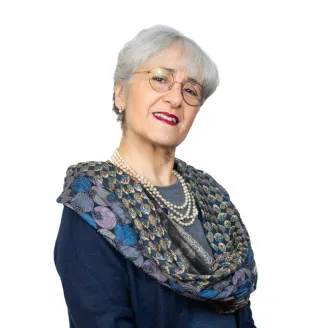
Francesca Maria Corrao
fcorrao@luiss.it
Instructional goals
This course goals are to provide a comprehensive introduction to the field of Mediterranean studies by drawing on a variety of disciplinary perspectives. Among the major topics covered are: conceptualizing the Mediterranean and Euro-Mediterranean relations, multiculturalism in the Mediterranean, the Arab uprisings and conflicts, as well as economic cooperation in the region.
Prerequisites
European history:
Modern and Contemporary History.
To learn about the history of Islam read Corrao F.M., 2017, Islam Religion and Politics, Luiss University Press.
Non European students can learn from: Mediterranean Pills online
Intended learning outcomes
1. Have a critical understanding of major political, social, cultural, and economic developments in Euro-Mediterranean relations.
2. Identify and deconstruct stereotypical ideas about the Mediterranean.
3. Assess current political and economic dynamics in Middle Eastern and South-European countries in an interdisciplinary perspective.
4. Understand the history and identity of the Mediterranean region.
5. Enhance their verbal presentation and written skills.
6. Use reliable first and second hand sources including academic publications, internet resources, media.
Course Contents
•The Mediterranean and the Arab world: East-West trade from the Age of the Islamic Empires to the Modern States
• Social and Cultural change from Panarabism to Political Islam.
The opening to foreign capital investments.
•Mediterranean Economic landscape. •The Youth Bulge. Mediterranean Transitions.
• The silk road across the Arab countries
•Civil Wars and New Challenges: Iraq, Syria, Lybia, Egypt, Turkey, Jordan and Qatar.
• Women Empowerment
• Political Islam in the Mediterranean
Reference Books
Corrao F.M., Redaelli R., State, Actors, and Geo-political Drivers in the Mediterranean, Palgrave, 2021.
Further readings: Ghalioun, Burhan. “The Persistence of Arab Authoritarianism.” Journal of democracy 15.4 (2004): 126–132.
Pace, M. (2014) “The EU's Interpretation of the 'Arab Uprisings': Understanding the Different Visions about Democratic Change in EU-MENA Relations”, JCMS, Volume 52, Number 5. pp. 969-984.
Maha Yahya “A Storm of Imperfection”, Carnegie Middle-East Center, https://carnegie-mec.org/diwan/80933
Jihane Sfeir "Les Libanais entre exaltation et angoisse, vent debout contre la corruption des élites" — https://theconversation.com/les-libanais-entre-exaltation-et-angoisse-vent-debout-contre-la-corruption-des-elites-125610
Bensaâd, A. & Rahal, M. (2020). Février 2019 : les débuts du Hirak en Algérie. Maghreb - Machrek, 2(2), 5-10.
Cherbi, M. (2020). Les mécanismes constitutionnels de l’autoritarisme algérien face au Hirak. Mouvements, 2(2), 166-176.
Jihane Sfeir « Palestinian Historiography, between History and Memory », in Roger Heacock (ed.), The Archival Globalization of Palestine. Towards a Chaotic Order, Birzeit University Press, p. 241-256.
Teaching Methods
A balanced combination of various teaching techniques including lectures, discussions, group work and other class activities as well as video materials will be implemented
•Lessons will be based on lectures with slides in class which will introduce students to the specific topic.
Seminar
Assessment Method
Attendance is mandatory, absences for internships are not justified (only in special cases authorized by the Area Director) other absences must be announced and motivated.
The assessment includes quizzes, power point presentation (or paper), a written and an oral tests:
- laboratory work evaluation: answers to the quizzes (marks from 1 to 15), power points (marks from 1 to 15) if a student cannot attend the course will prepare a paper (3000 words max) for a total of 30% of the final mark.
- the midterm written exam: test with 20 multiple choice questions (1 point for correct answer, -1 for wrong answer); and 12 open-ended questions (3 points with correct answer down to -3 for wrong, partial or incomplete answer), for a total of 30%. The duration of the exam is one hour.
- the final oral exam deals with the second part of the program (after the Midterm) for a total of 40%.
Subsequent sessions:
Traditional oral exam on the whole program. Please note: the results of laboratory tests also apply to subsequent exam sessions.
Thesis assignment criteria
The criteria needed for deciding on the subject of the final paper are: final score 30/30 and good analytical skills.
Week 1 Contenuto sessioni on line e on campus
"Notes on Reading of The Mediterranean: a History of Trade, Culture and Wars" in "State, Actors, and Geo-political Drivers in the Mediterranean”, Corrao F.M., Redaelli R. Eds., Palgrave, 2021, Chapter I.
Week 2 Contenuto sessioni on line e on campus
Periodical Quiz or class work
"A geo-historical compass for the ‘new mediterranean’ " in "State, Actors, and Geo-political Drivers in the Mediterranean", Corrao F.M., Redaelli R. Eds., Palgrave, 2021, Chapter II.
Week 3 Contenuto sessioni on line e on campus
Periodical Quiz or Class work
"An overview of the changed EU-MENA economic landscape: from cooperation to migration" in "State, Actors, and Geo-political Drivers in the Mediterranean, Corrao F.M., Redaelli R. Eds., Palgrave, 2021, Chapter III,
Week 4 Contenuto sessioni on line e on campus
Periodical Quiz or Class Work
"The Youth Bulge Dynamics in the Mediterranean Region: The Geopolitical Implications of Demography on Security and Stability", in "State, Actors, and Geo-political Drivers in the Mediterranean", Corrao F.M., Redaelli R. Eds., Palgrave, 2021, chapter IV.
Week 5 Contenuto sessioni on line e on campus
Class presentation and quiz
"Gender and Economics in Mediterranean: Looking for new opportunities for North African women", in "State, Actors, and Geo-political Drivers in the Mediterranean“, Corrao F.M., Redaelli R. Eds., Palgrave, 2021, Chapter VI.
Week 6 Contenuto sessioni on line e on campus
Class presentation and quiz
Gender Empowerment in MENA Countries
Week 7 Contenuto sessioni on line e on campus
GUEST: prof. Zaid Eyadat (Amman University) - "The Jazira Between Local, Regional and International scenarios”", Corrao F.M., Redaelli R. Eds., Palgrave, 2021, Chapter X
Week 8 Contenuto sessioni on line e on campus
MIDTERM
General Revision
Class Debate
Week 9 Contenuto sessioni on line e on campus
"Egypt and the regional challenges" in "State, Actors, and Geo-political Drivers in the Mediterranean", Corrao F.M., Redaelli R. Eds., Palgrave, 2021, Chapter VIII.
Wed Nov. 9, 11-12 am GUEST: Prof. Mariella PANDOLFI (University of Montreal): "Crises and impostures: the Balcans wars"
Class presentation and quiz
Week 10 Contenuto sessioni on line e on campus
"The Mediterranean as a new world hub and its role in the Belt and Road Initiative", + "Egypt and the regional challenges" , Corrao F.M., Redaelli R. Eds., Palgrave, 2021, Chapter VII + Chapter VIII.
Class presentation and quiz
Week 11 Contenuto sessioni on line e on campus
"Turkey as a Mediterranean country", "Proxy wars in the Levant: the case of Siraq", Chapter XIX and X.
Wed Nov 23 - GUEST Dott. Francesco Felle - Luiss University - on Palestine/Israel impasse.
"The Israeli-Palestinian impasse", in "State, Actors, and Geo-political Drivers in the Mediterranean", Corrao F.M., Redaelli R. Eds., Palgrave, 2021, Chapter XIII.
Class presentation and quiz
Week 12 Contenuto sessioni on line e on campus
Tue Nov 29, 6-7pm online - GUEST: Prof. Renata Pepicelli (Pisa University) “New challenges in Tunis”
"The evolving scenario of Tunisia", in "State, Actors, and Geo-political Drivers in the Mediterranean", Corrao F.M., Redaelli R. Eds., Palgrave, 2021, Chapter XII
Wed Nov 30 - GUEST Dott. Luigi Giorgi - "Mashreq Monarchies’ role in MED", Corrao F.M., Redaelli R. Eds., Palgrave, 2021, Chapter XIV.
Class presentation and quiz